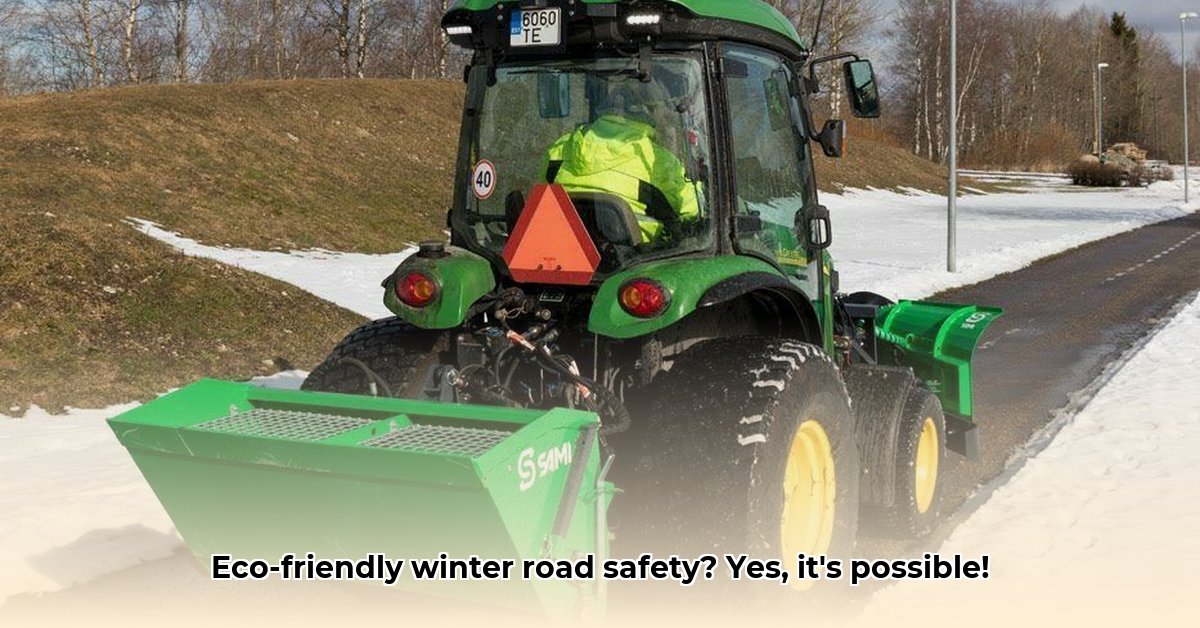
Keeping farm roads clear during winter is crucial, but excessive salt use harms the environment and wastes resources. This guide provides actionable steps for sustainable salt spreading using tractor-mounted spreaders, balancing road safety with environmental responsibility. For more on tractor-mounted spreaders, check out this resource on tractor spreaders.
Understanding Sustainable Salt Spreading: Beyond Minimizing Salt
Sustainable salt spreading isn't just about using less salt; it's about optimizing application for maximum effectiveness with minimal environmental impact. Overuse leads to soil degradation, water contamination, and harm to wildlife. The goal is to achieve safe, ice-free roads while minimizing these negative consequences. This involves precision application, efficient spreader use, and exploring alternative de-icing solutions.
Choosing the Right Tractor Salt Spreader: A Smart Investment
Selecting the right spreader is paramount. Consider these key factors:
Spreader Type: Rotary spreaders offer even distribution but are pricier. Spinner spreaders are more economical but less precise. V-box spreaders are durable and high-capacity but require careful calibration. GPS-guided spreaders provide the highest precision, minimizing waste but demanding a larger initial investment.
Capacity: Choose a spreader with a capacity that suits your farm's size and snowfall patterns. Oversized spreaders are inefficient for smaller operations.
Spread Pattern: Uniform distribution avoids salt accumulation in some areas while leaving others icy. Adjustable spread width allows for tailoring the application to the road's dimensions and conditions.
Precision Settings: Adjustable settings are crucial for adapting salt application to varying weather conditions, minimizing overuse.
Efficient Salt Spreading Techniques: A Step-by-Step Approach
Mastering your spreader maximizes effectiveness while minimizing salt use. Follow these steps:
Calibration: Accurately calibrate your spreader before each use. This ensures the correct salt disbursement rate, preventing waste and ineffective de-icing. Consult your spreader's manual for precise calibration instructions. Recalibration is essential before and after major weather events or adjustments to equipment.
Weather-Based Adjustments: Adapt your spreader settings to weather conditions. Heavier snowfall or freezing rain requires increased salt application, whereas light snowfall needs less. This prevents overuse in mild conditions or insufficient de-icing during severe weather.
Minimize Spillage: Spillage wastes salt and pollutes the environment. Regular maintenance and careful handling of the spreader are crucial to minimizing this. Inspect the spreader's mechanisms for any damage or blockages which may lead to spillage.
Reducing Salt Usage and Environmental Impact: Sustainable Strategies
Smart application techniques reduce salt use while maintaining road safety:
Pre-Wetting: Mixing salt with brine (saltwater) enhances its adherence to the road surface, thereby reducing the overall amount needed. While studies indicate potential salt reduction of up to 50%, effectiveness varies based on temperature and other environmental factors.
Alternative De-icers: Explore environmentally friendly alternatives like beet juice or sand, though their effectiveness compared to salt might differ depending on conditions. Research and experimentation to determine the optimal alternative for your situation.
Maintenance and Safety: Prioritizing Safe Operation
Proper maintenance is essential for optimal spreader performance and safety:
Regular Calibration Checks: Frequent recalibration ensures consistent salt application and prevents waste.
Thorough Inspections: Regularly inspect the spreader for damage, ensuring all components are functioning correctly and safely.
Safety Precautions: Always prioritize safety while operating heavy machinery. Wear appropriate Personal Protective Equipment (PPE) and follow all safety guidelines.
Future Trends: Technology Driving Sustainable Salt Spreading
Technological advancements are revolutionizing sustainable salt spreading:
GPS-Guided Spreaders: GPS-guided spreaders use sensors and satellite data for precise salt application, minimizing waste and environmental impact.
Sensor Technology: Sensors monitor road conditions, adjusting salt disbursement in real-time, optimizing application and reducing overuse.
Data Analytics: Data collected from sensors and spreaders informs future application strategies, further refining sustainable practices.
Conclusion: Sustainable Winter Road Maintenance is Achievable
Sustainable salt spreading is achievable. By combining the right spreader with efficient techniques and environmentally conscious practices, farmers can ensure safe roads while protecting the environment. Continuous learning and adapting to the latest advancements are essential for optimizing these processes. This includes staying abreast of research on alternative de-icing methods and enhancing precision technologies.
3 Pivotal Points:
- Precision application minimizes salt usage and environmental damage.
- Regular maintenance and calibration ensure optimal spreader performance.
- Exploring alternative de-icing agents and advanced technologies promotes sustainability.